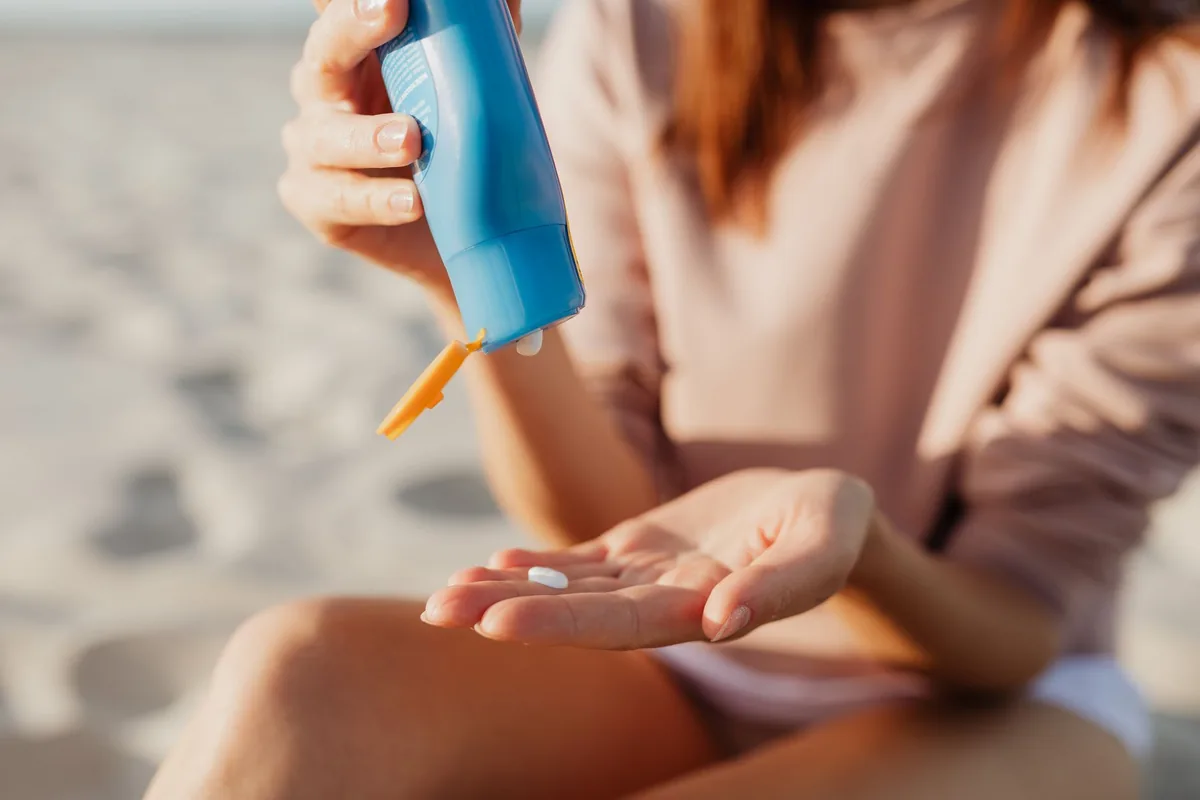
Flip over a sunscreen bottle and “broad spectrum SPF” sounds reassuring—but the label quietly skips the part most people actually need to understand. Sun protection is often reduced to a single number, yet the SPF value mainly tells you about one portion of the UV picture, and the words around it can change what a product is realistically doing for your skin.
Broad Spectrum SPF meaning, explained, comes down to coverage: it signals that a sunscreen has been formulated to filter both UVB rays, which are closely linked to sunburn, and UVA rays, which penetrate deeper and are more associated with long-term skin changes like fine lines and uneven tone. It is not a strength rating, and it does not mean the product is waterproof, sweatproof, or safe to apply once and forget; the amount you use and how often you reapply still matter.
You’ll get a clearer way to compare labels, understand why broad spectrum is not the same as higher SPF, and spot which details matter for daily wear. I’ve researched this as a careful summary of current labeling guidance and dermatology explanations, not as medical advice. If you have a specific skin concern or a history of sun damage, consider speaking with a qualified healthcare professional or a licensed dermatology provider before changing your routine.
What Broad Spectrum SPF Actually Means
Broad Spectrum SPF meaning, explained simply: a sunscreen labeled “broad spectrum” has been tested to show it protects against both UVA and UVB radiation, not just the type that causes sunburn. The SPF number still matters, but the broad spectrum label tells you the protection is more balanced.
UVA vs UVB: the two types of radiation that affect skin differently
UVA and UVB are two parts of ultraviolet light that reach the skin. UVB has shorter wavelengths and is the main driver of sunburn; it mostly affects the outer layers. UVA has longer wavelengths, penetrates deeper into the skin, and is more associated with premature aging and long-term skin changes.
- UVB: shorter wavelength, surface-level burn, stronger around midday and summer.
- UVA: longer wavelength, deeper penetration, present more evenly through the day and year.
- Both: can damage skin over time, so a sunscreen that only blocks one is incomplete.
Why SPF alone only tells part of the story
SPF is primarily a measure of how well a sunscreen reduces UVB-related redness, not a full picture of UVA protection. A high SPF can feel reassuring even when UVA coverage is weak. Broad spectrum testing adds a separate check for UVA, which is why two sunscreens with the same SPF can differ in how balanced their protection is.
A practical way to compare options: think of SPF as one feature—burn protection—and “broad spectrum” as the second feature—deeper skin protection. If you have a specific concern, consider speaking with a dermatology provider. Fact-checked: This content is for reference only and does not replace professional medical advice.
How Sun Damage Presents on Your Skin
Sun damage can appear in stages, starting with short-term signals and progressing to longer-lasting texture and tone changes. One useful framing is Broad Spectrum SPF meaning explained in plain terms: a broad-spectrum sunscreen filters both UVA rays, which are linked to premature aging, and UVB rays, which are linked to sunburn. Without that balanced protection, the skin may show several warning signs.
Fact-checked. This content is for reference only and does not replace professional medical advice.
Early signs: tanning, redness, warmth and tightness
These early signs are not a safe “base tan.” Tanning is the skin’s response to UV exposure, increasing melanin to protect cells, while redness and warmth reflect inflammation. Tightness often comes from moisture loss after the skin barrier is stressed.
- Tanning: melanin production rises after UV exposure.
- Redness and warmth: blood flow increases as the skin responds to irritation.
- Tightness: the outer layer may feel dry or stiff.
A practical tip: if you notice these signs, move to the shade and apply a broad-spectrum sunscreen to protect the skin from further exposure.
Long-term changes: hyperpigmentation, fine lines, rough texture and actinic keratosis
Over time, repeated UV exposure can contribute to visible changes. Hyperpigmentation may appear as uneven dark spots or patches. Fine lines and rough texture can develop as UV rays break down collagen and elastin, which help the skin stay smooth and firm. Actinic keratosis refers to rough, scaly patches that can feel like sandpaper; these are generally considered a sign of long-term sun damage and may need professional evaluation.
- Hyperpigmentation: uneven pigmentation from increased melanin production.
- Fine lines: reduced support from collagen and elastin.
- Rough texture: slower cell turnover and dryness.
- Actinic keratosis: scaly patches that a dermatology provider can assess.
If a specific spot or texture change worries you, consider speaking with a dermatology provider. This information is general and not a substitute for individual medical advice.
Why 'Broad Spectrum' Is Not the Same as High Protection
Broad Spectrum SPF meaning explained: it confirms a sunscreen filters both UVB and UVA rays, but it does not measure how much UVA protection you get. A high SPF mainly describes UVB burn protection, so two SPF 50 sunscreens can differ noticeably in UVA coverage.
PA ratings, UVA-PF and the UVA circle symbol
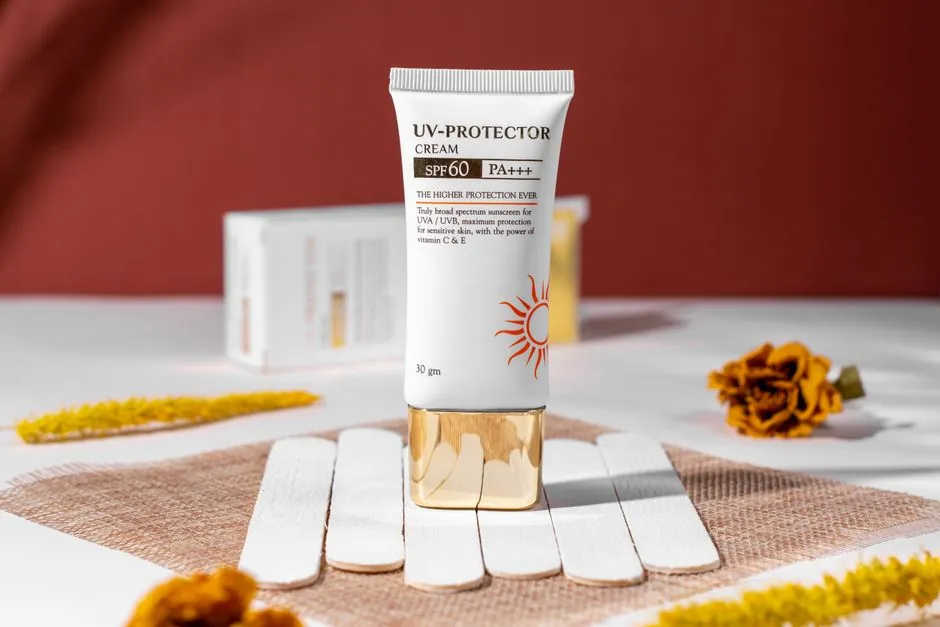
UVB is linked to sunburn, while UVA contributes to premature aging and skin cancer risk. Broad spectrum is a baseline: the product passes a UVA/UVB balance test. For finer comparisons, other labels help. The PA system (PA+ to PA++++) rates UVA protection, with PA++++ indicating the highest commonly labeled level. UVA-PF is a numerical ratio of UVA protection, and the UVA circle symbol used in some regions means the product meets a minimum UVA-to-SPF balance.
Practical takeaway:
- Confirm “broad spectrum” on U.S. sunscreens as the first filter.
- If UVA coverage is a priority, compare PA ratings or UVA-PF rather than SPF alone.
- Use the UVA circle as a quick visual cue, but check the label’s wording for water resistance separately.
Water resistance, sweat and reapplication still matter
No sunscreen is truly waterproof or sweatproof. “Water resistant” means the product was tested while a person was in water for a set time, typically listed on the label, and does not extend protection indefinitely. Broad spectrum only tells you about wavelength coverage, not how long the film stays on skin.
A practical rule is to reapply after swimming, heavy sweating, towel drying, or about every two hours. Think of sunscreen as a thin film that wears away unevenly—reapplication is what maintains the shield, not a higher initial SPF.
Fact-checked against current U.S. sunscreen labeling guidance. This content is for reference only and does not replace professional medical advice. If you have a specific skin concern or a personal or family history of skin cancer, consider speaking with a dermatology provider through your health plan’s directory.
How to Read a Sunscreen Label Beyond the Front of the Bottle
Fact-checked
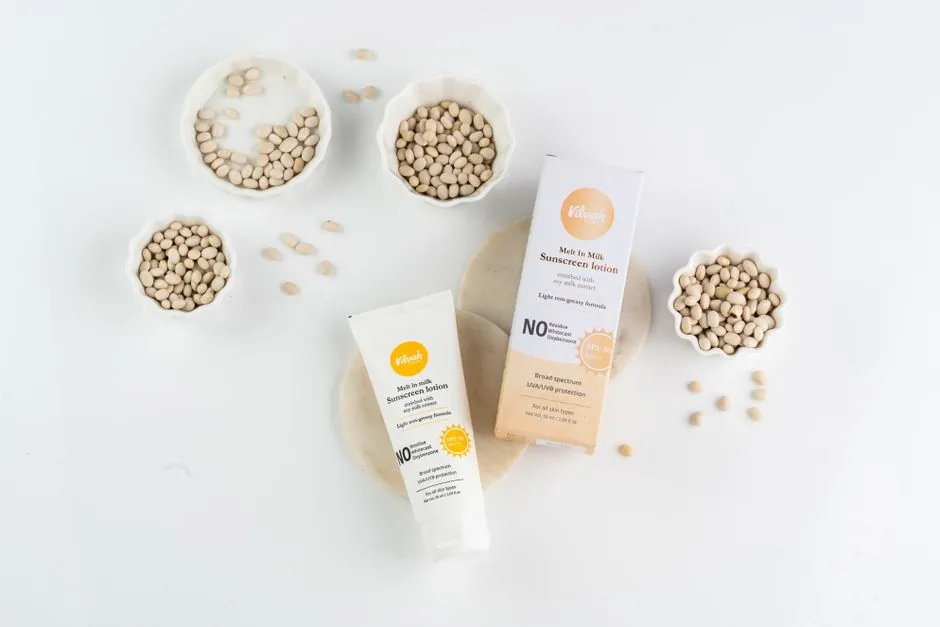
Key terms: broad spectrum, SPF 30+, PA+++ and water resistance
Broad spectrum: a broad spectrum claim means the product has been tested to provide meaningful protection against UVA rays, which are linked to premature skin aging, and UVB rays, which are mainly linked to sunburn. SPF 30+ refers to the level of UVB protection under standardized testing, not all-day wear.
PA+++ is a UVA protection rating common on imported sunscreens; more plus signs signal higher UVA coverage, but this scale is not interchangeable with the broad spectrum label. Water resistance means the formula holds up for a tested period while swimming or sweating, but no sunscreen is truly waterproof.
- Broad spectrum: covers both UVA and UVB.
- SPF 30+: UVB protection baseline; higher SPF adds smaller practical gains.
- PA+++ / water resistance: UVA rating and limited water exposure label.
Think of broad spectrum as covering both drizzle and downpour; SPF alone mainly tells you about the downpour.
Mineral vs chemical filters and why broad spectrum coverage differs
Mineral filters, such as zinc oxide and titanium dioxide, sit on the skin’s surface and mainly reflect, scatter, or absorb UV. Chemical filters absorb UV and convert it to heat. A key difference is that no single filter covers all UVA and UVB wavelengths equally, so broad spectrum coverage depends on how a formula combines filters.
Zinc oxide tends to cover a wider range of UVA and UVB on its own, while titanium dioxide provides strong UVB but less long-wave UVA coverage. Chemical filters often need combinations: one ingredient may handle UVB while another handles UVA. This means a mineral sunscreen and a chemical sunscreen can both earn a broad spectrum label, but their texture, skin feel, and potential for irritation may differ.
If you prefer less white cast, a chemical or tinted mineral option may be easier to wear daily; if your skin is easily irritated, a mineral-only formula may feel gentler, though individual reactions vary. When comparing labels, look at the active ingredient list rather than relying on “mineral” or “chemical” alone. See our sunscreen ingredient comparison for more.
This article is for reference only and does not replace professional medical advice. If you have a specific concern, consider speaking with a dermatology provider.
Common Broad Spectrum SPF Mistakes That Lower Protection
Understanding this dish is useful, but protection depends on how sunscreen is applied and maintained. Two common mistakes reduce real-world coverage even when the label looks strong.
Applying too little or forgetting to reapply
Many people apply far less sunscreen than the testing conditions assume. A practical reference is about a shot glass for the body and a nickel-sized amount for the face and neck, though coverage varies by product and body size. Applying too thinly can make the labeled SPF less reliable.
Reapplication is another weak point. Sunscreen wears off with sweat, water, rubbing, and time. Reapply after swimming, toweling off, or heavy sweating, and at least every two hours outdoors. “Water-resistant” does not mean all-day protection.
- Use enough to create an even, visible layer before rubbing it in.
- Reapply at least every two hours during sun exposure.
- Reapply immediately after swimming, drying off, or sweating heavily.
Relying on makeup, moisturizer or indoor light alone
Makeup or moisturizer with SPF can help, but people often apply them too thinly to reach the labeled protection. They are best treated as a bonus layer, not a replacement for a dedicated sunscreen when you plan to be outdoors.
Indoor light is another gap. Glass blocks much of the UVB linked to sunburn, but UVA can still pass through windows. Sitting near a sunny window or driving for long periods can expose skin to UVA, which is part of what broad spectrum means. A daily broad spectrum sunscreen can be a practical habit for extended indoor window exposure.
Fact-checked. This content is for reference only and does not replace professional medical advice. If you have a specific concern about sun protection or skin changes, consider speaking with a dermatology provider.
How to Choose and Apply Broad Spectrum Sunscreen Correctly
Fact-checked. For reference only; not professional medical advice.
Choose SPF 30 or higher and broad spectrum daily
The method in plain terms: a broad spectrum sunscreen filters both UVA rays, which contribute to premature skin aging and some skin cancers, and UVB rays, which are mainly linked to sunburn. An SPF number mainly rates UVB protection. Choosing broad spectrum ensures you are not only preventing a burn but also addressing the deeper, longer-term UVA exposure.
For daily use, health authorities generally advise choosing a sunscreen with SPF 30 or higher and a broad spectrum label. SPF 30 offers substantially stronger UVB protection than SPF 15, while higher SPFs add smaller incremental gains. A practical way to compare: think of SPF as a dimmer switch rather than an on/off switch—higher numbers help, but the real-world difference depends on applying enough and reapplying. If you will be outdoors for long periods, around water, or in intense sun, a water-resistant formula may be a more reliable choice.
- Check the label for “broad spectrum” and SPF 30 or higher.
- Look for water resistance if sweating or swimming is likely.
- Choose a texture you will use daily—creams for dry skin, gels for oily skin, or sticks for around the eyes.
Use the two-finger amount and reapply every two hours
The two-finger rule is a simple estimating method: squeeze sunscreen along the length of two fingers and apply that amount to your face, ears, and neck. For the whole body, many adults need about a shot-glass amount, but body size and clothing coverage vary. Applying too little is a common reason sunscreen underperforms, so a generous, even layer matters more than the exact tool you use to estimate it.
Reapply every two hours, or sooner after swimming, toweling off, or heavy sweating. Sunscreen breaks down and shifts over time, so one morning application rarely lasts through the day. A practical tip: set a phone reminder on long outdoor days and keep a small bottle in a bag or car, but avoid storing sunscreen in direct heat for long periods because heat can affect the formula.
If you have a specific concern about sun damage, a skin reaction, or a changing lesion, consider speaking with a dermatology provider.
When to See a Doctor or Dermatologist About Sun Damage
Most sun-related skin changes are cosmetic, but a few signs are worth a professional look. Understanding this version—protection against both UVA and UVB rays—helps with prevention, yet it does not replace checking for changes that need medical attention.
Red flags: changing moles, non-healing spots, persistent scaly patches
Skin spots that change in size, shape, color, or border over weeks to months are a common reason to schedule an appointment. A spot that bleeds, crusts, or does not heal within a few weeks also deserves attention. Persistent scaly or rough patches may be actinic keratoses, a type of precancerous skin growth, which are often treated early because they can progress over time.
Clinical guidance generally advises watching for these patterns rather than trying to self-diagnose at home. Comparing a new or changing mark with your usual freckles and moles can help, but it is not a substitute for a trained eye. When in doubt, a dermatologist can examine the area with a magnifying tool or recommend a small sample (biopsy) if needed.
Severe sunburn signs: blistering, fever, chills or dizziness
Most sunburns improve with cool compresses, moisturizer, and rest. However, blistering over a large area, fever, chills, nausea, headache, confusion, or dizziness can signal a more serious systemic reaction. These symptoms are uncommon with routine sunburn and may warrant urgent medical evaluation.
If you are caring for someone with these signs, focus on hydration and avoid popping blisters, which can increase infection risk. A practical rule of thumb is to treat a sunburn like a burn injury: if it covers a large area or the person feels unwell, seeking care is reasonable.
- Blisters covering a large area or on sensitive areas such as the face, hands, or genitals
- Fever or chills alongside skin pain
- Dizziness, confusion, or fainting after sun exposure
Fact-checked. This content is for reference only and does not replace professional medical advice. If you have a specific concern, consider speaking with a dermatologist or primary care provider.
Key Takeaways
Understanding this recipe comes down to separating UVB-focused SPF numbers from the UVA coverage that “broad spectrum” signals. A higher SPF generally offers more UVB protection, but the difference becomes smaller at higher levels, and it does not make a sunscreen last all day. The more useful comparison is between broad spectrum and non-broad spectrum formulas: one addresses both major UV ranges, while the other may leave a gap in UVA protection even if the SPF number looks strong.
That distinction matters when weighing daily moisturizers with SPF against dedicated sunscreens, or mineral versus chemical options. If you have a specific concern such as sun sensitivity or a history of frequent burns, a dermatology provider can help compare choices. Given how much UV exposure happens during ordinary routines, are you choosing a sunscreen based mainly on the SPF number, or on the broader protection label?
References
- What Does Spectrum Mean | TikTok (tiktok.com)
- Some of my favourite things: SPF, PA+++, Broad Spectrum labels... (ru.pinterest.com)