
You’ve probably heard that hitting a certain daily step count is the key to staying healthy—but the number in your head may not match your age, fitness level, or daily reality. The familiar 10,000-step benchmark gets repeated so often that it starts to feel like a universal rule, yet it was never designed with every stage of life in mind. Understanding how many steps per day by age can save you from chasing a goal that’s either needlessly ambitious or too easy to make a difference.
When you look at the available guidance as one person trying to sort through the noise, a clearer picture emerges: step needs shift over time. Younger adults often have more capacity for higher daily totals, while older adults can get meaningful benefit from fewer, more consistent steps—especially when those steps are paired with strength and balance work. The goal isn’t to hit a single magic number, but to find a range that supports your current health without setting you up for frustration or injury.
This guide walks through what changes decade by decade, how to adjust if you’re returning from an injury or managing a chronic condition, and why how you walk can matter as much as how far you go. As a reminder, this is general information for reference only and does not replace individual advice from a qualified healthcare professional. If you have a specific concern about your activity level, consider speaking with a primary care provider or a physical therapist.
Why 10,000 Steps Is a Marketing Number, Not a Medical Prescription
The question how many steps per day by age often starts with a false assumption: that one target fits everyone. A more useful framing is that movement helps at levels below 10,000, and age, baseline fitness, and health conditions matter more than a single counter.
Where the 10,000-step myth actually began
The 10,000-step goal traces back to a 1960s Japanese pedometer marketing campaign, not a clinical guideline. The number was chosen because it was memorable and easy to print, not because researchers found it medically necessary. That origin helps explain why the target has stuck even though public health guidance usually focuses on minutes of moderate activity rather than a fixed step count.
For most adults, step count is a useful proxy for movement, but it does not capture intensity, joint strain, or whether those steps replace long sitting. A person who walks 4,000 brisk steps may get more cardiorespiratory benefit than someone who shuffles 10,000. The key is to use step goals as a flexible benchmark, not a prescription.
What recent mortality studies show about 4,000, 7,000, and 10,000 steps
Observational research often groups participants by step counts like 4,000, 7,000, and 10,000. The pattern that emerges is not "more is always better." Compared with very low step counts, people who regularly reach around 4,000 to 7,000 steps tend to show meaningfully lower mortality risk. Additional steps may add some benefit, but the curve flattens, and extremely high counts are not necessary for most health outcomes.
A practical takeaway: if you currently average 3,000 steps, moving to 5,000 or 6,000 is likely a bigger relative win than pushing from 8,000 to 12,000. How many steps per day by age also shifts with life stage. Older adults or people managing joint pain may benefit from lower step targets with more strength and balance work. Here are three ways to set a realistic goal:
- Track your current average for one week before changing anything.
- Add 500 to 1,000 steps above your baseline, not an external target.
- Reassess every few weeks and adjust based on energy, pain, and recovery.
If you have a specific concern about your activity level, consider speaking with a primary care provider or physical therapist.
How Many Steps Per Day by Age: Realistic Targets Instead of One-Size-Fits-All
The “10,000 steps” rule is more marketing than medicine. How many steps per day by age depends on growth, mobility, and overall health. A range works better than one magic number for everyone.
Children and teens: 12,000–16,000 steps to support growth and energy
Health authorities generally advise that school-aged children and teens accumulate roughly 12,000–16,000 steps per day through play, walking, and sports. Regular movement supports bone development, cardiovascular fitness, and healthy energy regulation. This is not a rigid requirement; active minutes matter as much as the step count itself.
Think of it like a bank account: short bursts of activity add up across the day. A teen who walks to school, moves between classes, and plays sports may reach this range without ever checking a tracker. The goal is consistency, not perfection.
Adults 18–64 and older adults 65+: why 4,000–8,000 may be enough
For most adults, research suggests meaningful benefits begin well below 10,000 steps. Many people see improvements in cardiovascular and metabolic health in the 4,000–8,000 step range, with evidence indicating returns level off after that. A smaller, steady habit is often more sustainable than chasing a distant target.
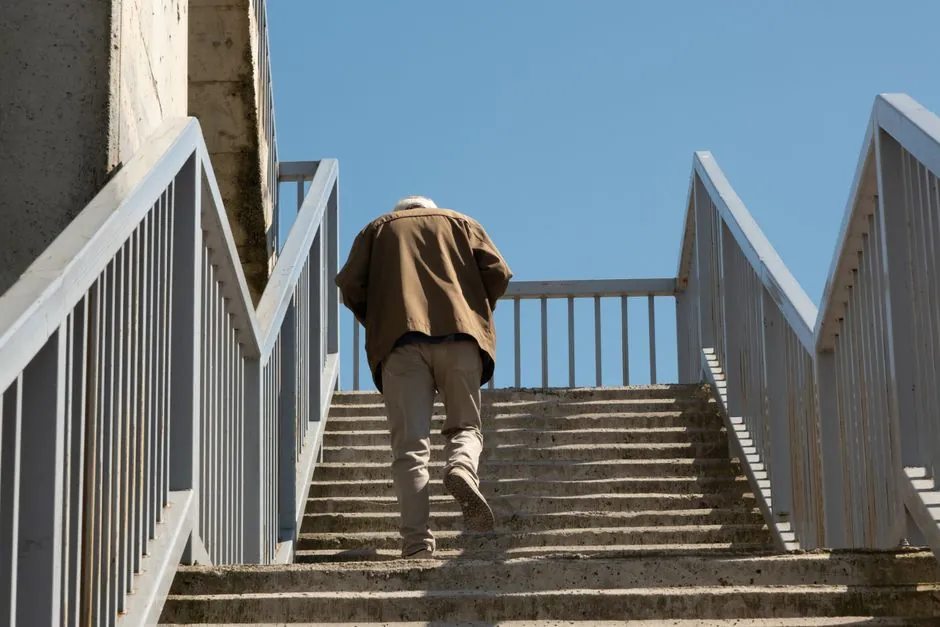
For adults 65 and older, 4,000–8,000 steps remains a reasonable benchmark, but the focus shifts toward balance, joint comfort, and avoiding long periods of sitting. Someone with stiff knees may gain more from 5,000 steps plus strength work than from forcing 10,000 steps on sore joints.
- Start with your current average, then add 500–1,000 steps per week.
- Split movement into three 10-minute walks if one long walk feels unrealistic.
- Track steps for a few days to find your personal baseline before setting a goal.
For more ideas, see our guide to a daily movement routine.
Fact-checked. This content is for reference only and does not replace professional medical advice. If you have a specific concern about mobility, joint pain, or exercise capacity, consider speaking with a physical therapist or a primary care provider.
Average Steps Per Day by Sex, Occupation, and Country—and Why Averages Mislead
Population step averages sound tidy, but they are built from wildly different measurement methods, job demands, and environments. This recipe is useful as a rough reference, not a rule.
What global step data reveals about baseline activity levels
Public activity tracking suggests a few consistent patterns. Men often average somewhat more steps than women in several countries, but the overlap between individuals is large and the gap narrows when paid work and caregiving are accounted for. Occupation explains much more of the variation: someone on a hospital floor or a construction site can accumulate thousands more daily steps than a person in a desk-based role, even at the same age.
Step counts also tend to decline in later decades, but that decline usually reflects changes in health, retirement, and mobility rather than age itself. Country-level differences emerge from infrastructure, climate, and how often walking is built into daily errands. Averages based on a single device brand or a short observation window can miss these contextual effects.
- Job type: active roles create far more baseline movement than seated work.
- Measurement method: phone sensors, wrist trackers, and waist pedometers count differently.
- Environment: walkable neighborhoods and mild weather support higher daily totals.
Why your personal baseline matters more than population averages
A national or global average tells you almost nothing about whether your own routine is healthy. A better approach is to track your personal 7-day step baseline, then look for a consistent upward trend rather than a single magic number. This dish can give a starting point, but your baseline, joint comfort, and daily responsibilities matter more.
Think of it like comparing sleep: a shift worker’s “normal” will never match a population average for nighttime sleep, and that’s fine. What matters is your own pattern and whether you are gradually moving more without pain. If you have a specific concern about mobility, balance, or starting a walking routine, consider speaking with a physical therapist, exercise physiologist, or primary care provider.
Fact-checked: General activity patterns only; not individual medical advice.

How an Underactive Body Presents: Symptoms to Watch by Age
Fatigue, stiffness, poor sleep, and mood dips that may signal too little movement
An underactive body often shows up first as low-grade fatigue that is easy to blame on a busy week. When movement drops for several days or weeks, muscles and joints can feel stiff, especially in the morning or after sitting for long stretches. Many people also report that their sleep feels less restorative, even when total time in bed stays the same. This is a common pattern, not a diagnosis.
The question of the method has no one-size-fits-all answer, because baseline fitness, health conditions, and daily demands vary widely. What matters more is noticing changes from your usual pattern. A practical check is to ask whether ordinary tasks—climbing stairs, carrying groceries, walking to the car—now feel noticeably harder than they did a few months ago.
- Stiffness that eases with gentle movement
- Unrefreshing sleep despite adequate time in bed
- Lower mood or irritability that improves after a walk
Declining balance, slower walking speed, and reduced functional strength in older adults
In older adults, too little movement often appears as changes that are easy to overlook day to day. Walking speed may gradually slow, and the person may take shorter, more cautious steps. Balance can decline, making it harder to stand from a chair without using the hands or to turn quickly while walking. Functional strength—the ability to push, pull, lift, and carry in everyday life—tends to fade when it is not regularly challenged. These changes are not an automatic part of aging; they often track with low activity.
A practical analogy is a hinge that gets harder to move when it is not used, even if the metal is fine. Movement lubricates joints, keeps muscles responsive, and helps the nervous system stay sharp about balance. If you or someone you care for notices a need to steady themselves on furniture or a fear of falling during routine walks, that is worth discussing with a healthcare professional. A physical therapist or primary care provider can help sort out whether the issue is inactivity, a separate medical concern, or both.
Fact-checked. For reference only; not medical advice. If you have a specific concern, consider a primary care provider or physical therapist.
When to See a Doctor: Step-Count Red Flags
Chest pain, dizziness, or unusual shortness of breath while walking
Step counts are useful for tracking general activity, but this metric only tells part of the story. A comfortable pace should feel like moderate effort, not distress. If you feel chest pressure, pain, or tightness, lightheadedness or dizziness, or shortness of breath that is out of proportion to your walking speed, stop walking and rest.
These symptoms are not a normal part of building fitness or aging. They can be signs that your heart or lungs need a closer look. While occasional breathlessness when climbing hills can be expected, any of the following should prompt a same-day call or urgent visit:
- Chest discomfort that spreads to the arm, jaw, or back
- Dizziness that makes you feel unsteady or faint
- Shortness of breath that does not ease within a few minutes of resting
Do not try to “push through” these feelings. A clinician can check whether the symptoms are related to your heart, lungs, or something else.
Joint pain, frequent falls, or a sudden unexplained drop in daily steps
Changes in your baseline matter more than any single number. Even if your total falls within a general range for your age, a sudden drop in daily steps over a week or two — without a clear reason like illness or travel — is worth discussing with a provider. The same is true for joint pain that changes how you walk or makes you avoid stairs, and for falls or near-falls.
A practical first step is to keep a simple log for about a week: note your step count, where you walked, and any pain, stiffness, or balance issues. This can reveal patterns that are easy to miss day to day. For example, if knee pain only appears after walking on hard pavement, you and a clinician may have a clearer starting point.
Consider speaking with a provider if you notice:
- Joint swelling, warmth, or pain that lasts more than a few days
- Two or more falls, or any fall that causes injury
- A step count that is noticeably lower than your usual range with no clear explanation
This information is general and does not replace individualized advice from a licensed healthcare professional.

Building a Safe Step Goal That Works for Your Body
Charts that answer this question can be useful starting points, but they miss the most important variable: your current movement baseline. A realistic goal grows from where you actually are, not from a one-size-fits-all number.
Start from your current 7-day average instead of an arbitrary target
The often-repeated 10,000-step figure is not a medical threshold. Instead of chasing it, wear a simple tracker or use a phone pedometer as part of your daily movement habits for a full week without changing your routine. Add the daily totals and divide by seven. That average is your honest starting line.
From there, compare your average with general movement guidance for your age range. This question matters less than whether your weekly average is stable, pain-free, and sustainable. For example, if your seven-day average is 3,200 steps, jumping straight to 10,000 may spike joint soreness and make the habit harder to keep. A gradual ramp based on your own baseline gives your tendons, joints, and energy systems time to adapt.
Add 500–1,000 steps at a time and reassess weekly for pain and energy
Once you know your seven-day average, increase by 500–1,000 steps per day for the next week. This small bump is usually enough to build capacity without triggering the aches that derail consistency.
At the end of each week, check three things:
- Any new or worsening joint, foot, or lower back pain
- Unusual fatigue that lingers into the next day
- Whether the extra walking feels manageable or forced
If all three are clear, add another 500–1,000 steps the following week. If pain or fatigue appears, hold at your current level for another week or drop back slightly. The goal is a trend you can maintain, not a monthly sprint.
Fact-checked · This content is for reference only and does not replace professional medical advice. If you have persistent pain or a condition that affects mobility, consider speaking with a physical therapist or sports medicine provider.
Beyond the Step Count: Cadence, Bouts, and Strength
Why brisk walking and step cadence may matter as much as total steps
Charts of the method offer a starting point, but the same number can mean different things. Two people may each log 8,000 steps—one in short, slow trips around the house, the other in two brisk 20-minute walks. The second person is getting more cardiorespiratory benefit. The difference comes down to cadence (steps per minute) and bouts (continuous periods of walking). Research suggests that brisk walking—a pace where you can talk but not sing—improves heart and lung fitness more efficiently than slow, fragmented movement. If most of your steps are low-intensity, try adding one or two longer walks where you maintain a steady, moderately breathless pace for several minutes.
You can build cadence. Alternate one minute of faster walking with two minutes of your usual pace, and repeat a few times. Over weeks, lengthen the faster intervals. You don't need an exact step-per-minute target; use the talk test as your guide. Keeping total daily steps matters for general activity, but shifting some of those steps into moderate-intensity bouts helps the same step count support your heart, lungs, and metabolic health more effectively.
Strength training to support walking capacity and reduce injury risk
Walking builds endurance, but it does little for the muscle strength and joint stability that keep you moving comfortably. Strength training—using body weight, resistance bands, or light dumbbells—supports the hips, knees, ankles, and core. Stronger legs and glutes can improve stride efficiency and may lower the risk of falls or overuse injuries. You don't need a gym; two short home sessions per week are enough for gradual progress. Stop any movement that causes sharp pain.
- Sit-to-stand from a chair without using your hands, which strengthens the legs and hips for walking.
- Step-ups onto a stable platform, alternating legs to train balance and single-leg control.
- Wall push-ups or countertop push-ups to support posture and arm swing.
A practical tip: do a few chair stands or step-ups right before a walk as a warm-up. If you have joint pain, balance issues, or a chronic condition, consider speaking with a physical therapist or primary care provider before changing your routine. This is for reference only and does not replace professional medical advice.
Final Thoughts
The “right” number is not a fixed target. This version matters less than where you’re starting and what your body can handle consistently. A younger adult with no limiting conditions may aim higher without much thought, while an older adult, someone with joint pain, or someone rebuilding after illness may get more benefit from a modest, steady count. Comparing yourself to a single daily number often creates more pressure than progress.
That means your best step goal depends on your situation. If you have balance, heart, mobility, or pain concerns, speak with a qualified healthcare professional before increasing activity. This content is for reference only and does not replace professional medical advice. If you have a specific concern, consider speaking with a specialty provider such as a physical therapist or sports medicine clinician.
References
- Recommended Steps per Day by Age - Howdy Health (howdyhealth.tamu.edu)
- Steps per Day Goals and Averages by Age and Sex (verywellhealth.com)