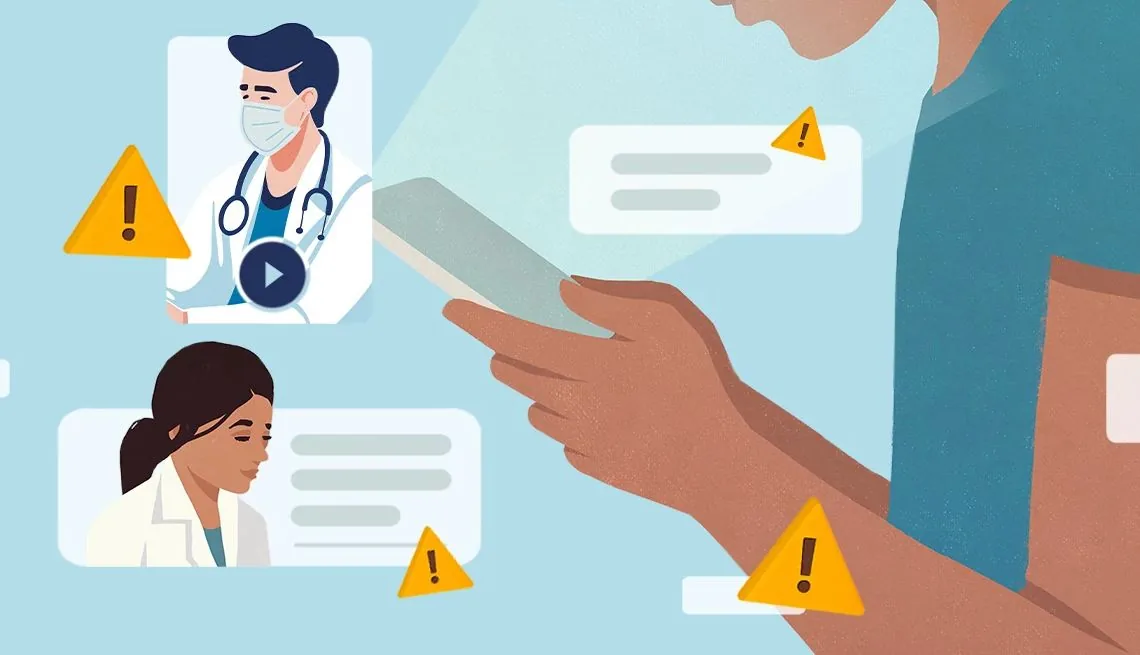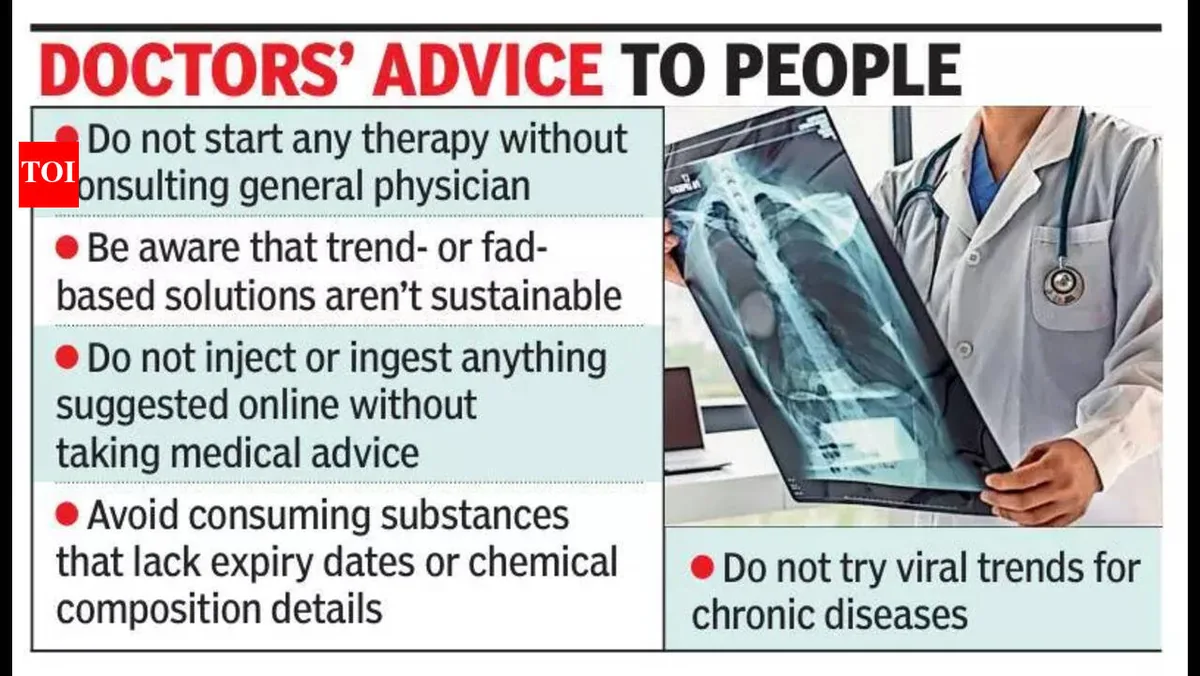
Scroll social media long enough and you'll see it: someone rubbing a lemon half under their arm instead of deodorant, plunging sensitive body parts into ice water "for fertility, " or chugging carbonated water without burping like it's a health achievement. Some of these clips are jokes, some are sincere, and a lot of them are confident-sounding nonsense. The problem is that they all look identical in your feed, which is exactly why knowing how to find reliable sources for basic medical facts matters more than any single piece of advice you'll scroll past.
This article breaks down how health misinformation spreads, why confident delivery isn't the same as accurate information, and how to evaluate a claim before you act on it. We'll use real examples—the lemon deodorant trick that can irritate skin, the viral "one medical test per year" full-body scans that may do more harm than good for healthy people, and the extreme wellness habits that get dressed up as science. For each one, we'll compare what the claim promises against what clinical guidance generally says, and show you the simple checks that separate useful information from content designed to grab attention.
A quick note on what this is and isn't: I'm a writer who researches and summarizes health topics, not a doctor, so nothing here is personalized medical advice—it's for reference only and doesn't replace a conversation with a qualified healthcare professional. What you'll walk away with is a practical toolkit: the questions to ask, the red flags to watch for, and the habit of pausing for thirty seconds to verify before you rub citrus on your skin or book a VIP screening package abroad. If a specific concern is nagging at you, that's a conversation for a licensed provider—this article just helps you sort good information from noise first.
Why Most Viral Health Advice Fails the Reliability Test
Short-form health videos often sound convincing, but they skip the steps that make reliable sources for basic medical facts trustworthy: verification, context, and disclosure of risks. A clip in this article's video, for example, claims conventional deodorants contain aluminum as a "known neurotoxin" and suggests rubbing lemon halves under the arms instead. The safer move? Search whether that claim holds up before sharing it—the video's own reactor points out how quick that check is.
How unverified TikTok health claims spread faster than corrections
Corrections are slow because they require context; viral claims are fast because they need none. Health authorities generally advise pausing before acting on a claim that:
- Calls an everyday ingredient a toxin without citing evidence
- Offers a "natural and cheaper" swap with no safety testing
- Dismisses nuance, like the fact that testicles simply function a few degrees below body temperature—cool, not frozen
The cost of trusting the wrong source: wasted money, skin irritation, and worse
The lemon-deodorant tip illustrates the downside: citrus juice is acidic, and applying it to skin can trigger contact dermatitis—redness, itching, and irritation. Similarly, extreme practices like prolonged ice baths marketed for "fertility boosting" overstate what the body actually needs. Before trying a viral tip, weigh the claimed benefit against the plausible harm, and compare it against reliable sources for basic medical facts rather than a single influencer's anecdote.
This content is fact-checked and for reference only; it does not replace professional medical advice. For skin reactions, a dermatologist is the relevant specialty provider to consider.

What Makes a Medical Source Reliable
When you're searching for reliable sources for basic medical facts, the first filter is simple: who is speaking, and are they qualified to speak on this topic? A licensed clinician in the relevant field carries more weight than a charismatic influencer — as one viral clip shows, someone presenting themselves with an impressive-sounding title can still spread claims (like lemon juice replacing deodorant) that a dermatologist would quickly flag as a skin-irritation risk.
Credentials that actually matter: specialist, licensed clinician, or random influencer?
Ask three questions:
- Licensure: Is the person a licensed professional (MD, DO, NP, RD, PharmD) in your country or state?
- Relevance: A surgeon's take on skincare habits isn't automatically an expert take — specialty matters.
- Incentives: Are they selling the product they recommend?
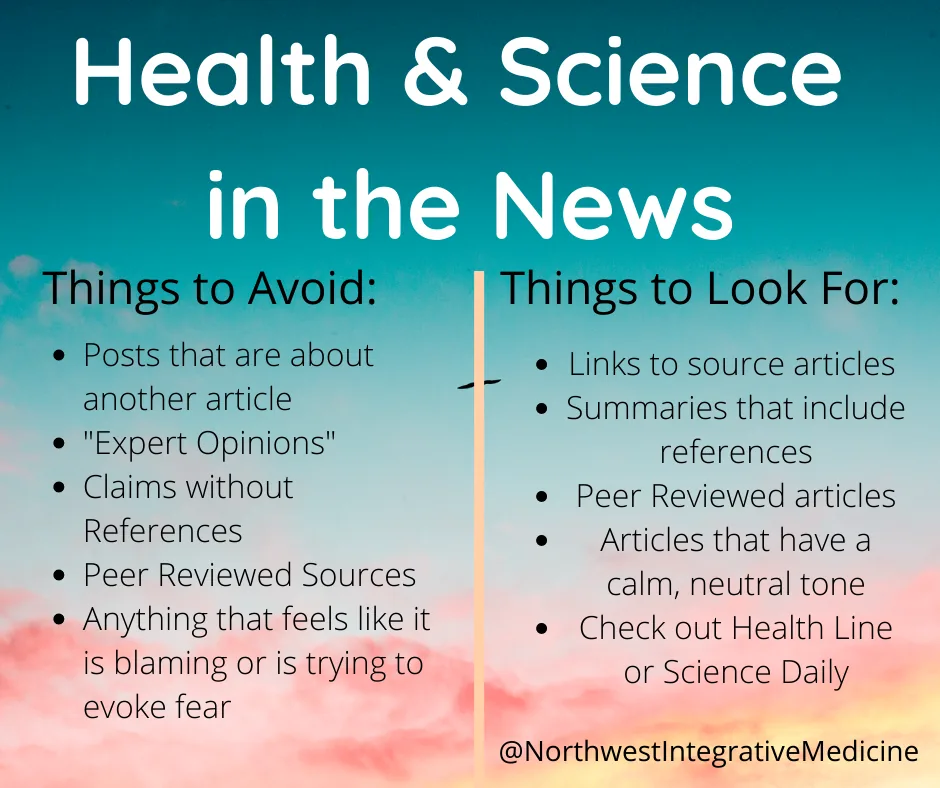
Signs of evidence-based content: citations, peer-reviewed research, and transparency about uncertainty
Trustworthy health content links to peer-reviewed research or established health authorities, distinguishes preliminary findings from settled guidance, and admits uncertainty. Red flags include miracle claims, unnamed "studies, " and one-size-fits-all fixes.
This article is for reference only and isn't a substitute for professional medical advice. If a specific concern arises, consider speaking with a specialty provider through our provider directory.

Trusted Places to Find Basic Medical Facts
When social media claims collide with health questions — like whether rubbing lemon on skin is a safe deodorant, or whether freezing improves fertility — the most useful habit is checking reliable sources before sharing or trying anything. Not all sources carry the same weight.
PubMed and National Library of Medicine resources for primary research
PubMed is a free search engine indexing published biomedical research. Its strengths are transparency and depth: you can read study abstracts directly, check whether research involved humans or animals, and note whether findings are preliminary. The trade-off is readability — abstracts use technical language, and a single study rarely settles a question. Health authorities generally advise treating one study as a starting point, not a conclusion. A practical tip: search a claim's key term plus the word "review" to find summaries of multiple studies.
Established health sites and medical institutions vs. algorithm-driven content
Long-standing health institutions and government agencies summarize research in plain language, explain terminology, and usually note when evidence is limited. Compared with that, algorithm-driven short videos optimize for engagement, not accuracy — the transcript's example of "counting to five" after dropping food illustrates how catchy rules can oversimplify a messier reality about germs. A quick checklist:
- Authorship: Is a real person or organization named and accountable?
- Sourcing: Does it link to research, or assert without evidence?
- Balance: Does it mention risks and limits, or only benefits?
This content is for reference only and does not replace professional medical advice. If a specific concern arises, consider speaking with an appropriate specialty provider.

Red Flags That a Health Claim Is Not Trustworthy
Short wellness clips often spread claims faster than they can be checked. Knowing how to spot warning signs helps you find reliable information instead of falling for catchy but shaky advice. When a claim surprises you, a quick search of what health authorities generally advise takes minutes — and often shows the viral version left out important context.
Oversimplified Fixes: Lemon as Deodorant, Ice Water for Fertility, "Eat Clean" Claims
Viral tips tend to compress complex biology into one-step solutions. Watch for patterns like these:
- Household items as treatments — rubbing lemon on skin may seem natural, but its acidity can irritate and trigger contact dermatitis in some people.
- Dramatic fertility claims — cold exposure is marketed as boosting testosterone or sperm quality; fertility depends on overall health, not one habit.
- Vague phrases like "eating clean" — undefined terms let influencers imply that clean eating eliminates body odor or prevents illness, without evidence.
Anecdotes Presented as Proof and Wellness Marketing Dressed Up as Medicine
One person's result is a story, not evidence. Analogies help here: a testimonial is like a single movie review — useful context, but not a verdict. Clinical guidance usually relies on studies involving many participants, not charisma. Also be cautious when advice ends with a product link or clinic upsell, which suggests marketing rather than education. Cross-check claims against established guidelines before changing a routine. For related reading, see how to read FDA food labels.
This content is for reference only and does not replace professional medical advice. If a specific concern arises, consider speaking with a dermatology or primary care provider.

How Symptoms Get Misdiagnosed by Bad Advice
Social media health content often looks authoritative but skips the step of verifying basic facts. Before acting on a viral claim, cross-check it against reliable sources like federal health agency websites and medical school patient pages. A few minutes of checking can prevent weeks of treating the wrong problem.
When a chronic cough or sore throat is reflux, not infection
As the video explains, acid can travel far enough up the throat to cause a persistent cough, sore throat, or mucus sensation — a pattern sometimes called laryngopharyngeal reflux. Because these symptoms resemble an infection, people may repeatedly assume they are "fighting something" when stomach acid is the actual irritant. The practical takeaway: if throat symptoms linger well beyond a typical cold, mention the possibility of reflux to a clinician rather than cycling through cold remedies.
Why TikTok 'hacks' can mask symptoms instead of addressing causes
Viral remedies often trade a small symptom for a bigger problem. Examples from the video include:
- Lemon as deodorant — acidic juice can trigger skin irritation and contact dermatitis.
- Chugging carbonated water without burping — traps gas and can promote reflux.
- Extreme "fertility" hacks — cooling claims go far beyond what research supports.
The pattern is consistent: quick fixes address surface symptoms while the underlying cause continues. This site is one person summarizing general information, not a medical provider — for persistent symptoms, consider speaking with a primary care or ENT (ear, nose, and throat) provider.
When to See a Doctor Instead of Searching Online
This recipe — like how to read a food label or what a blood pressure cuff measures — is a great starting point. But searching has limits, and knowing them keeps you safer. As the video notes, even a quick Google search can catch a false claim (deodorant containing aluminum is a common myth), yet symptoms themselves are a different matter.
Red flags: persistent symptoms, chest or throat issues, unexplained changes
Skip the search bar and contact a qualified provider when you notice:
- Persistent symptoms that linger for weeks or keep returning
- Chest or throat issues — the video's example of acid reaching the throat and causing a chronic cough shows how misleading self-diagnosis can be
- Unexplained changes in weight, skin, sleep, or energy with no obvious cause
Why screening tests and full-body scans aren't for everyone
The video's medical tourist example makes a fair point echoed by clinical guidance: tests done in bulk on healthy people aren't truly screening tests. They're diagnostic tools, meant for people whose doctor suspects a specific condition. Applied to everyone, they tend to produce false alarms — and anxiety — more than answers. This dish can help you prepare questions; it can't replace a clinician deciding which tests, if any, you actually need.
If a symptom concerns you, consider speaking with a primary care provider first, or a relevant specialist — for throat or reflux-type issues, an ENT or gastroenterologist.
A Simple Checklist Before You Share or Try Any Health Claim
Viral clips — like the one above pairing a lemon-rub deodorant tip with skepticism about aluminum — move fast, and some claims hold up better than others. Finding the truth takes a little structure, not a science degree.
Five questions to ask about any viral medical fact
- Who is speaking, and what are their credentials? An impressive title doesn't guarantee accuracy in a related field.
- Is the claim specific or sweeping? Words like "detoxes" or "always works" are red flags.
- What's the risk if it's wrong? Rubbing lemon on skin, for instance, can irritate some people — low stakes, but worth knowing.
- Is it selling something? Skepticism is warranted when a claim leads to a purchase.
- Does the evidence match the confidence? Preliminary research rarely supports bold conclusions.
How to cross-check a claim in under five minutes
Spend about a minute searching whether established health authorities address the claim, another checking whether a reputable medical site describes it differently, and a final minute noting how the source of the claim makes money. If sources conflict or stay silent, treat the claim as unproven rather than false — and for personal health decisions, a conversation with a qualified professional beats any comment section. This guide is for reference only and isn't a substitute for medical advice.
Before You Decide
When you rely on this version, the trade-offs become easier to weigh: government health agencies tend to be slower to update but carefully vetted, while academic and hospital sites are more readable but may simplify nuance. Health blogs and social media sit at the other end—fast and accessible, but rarely checked by anyone with clinical training. None of these options is perfect on its own, so cross-checking a claim across at least two independent, reputable sources remains the most practical habit you can build.
Two concrete next steps: first, pick one health claim you have seen recently and trace it back to a primary source—an agency page or a peer-reviewed summary—before sharing or acting on it. Second, if a question involves your own body, labs, or symptoms, note it down and bring it to a qualified healthcare professional; for general concerns, a primary care provider is usually the right starting point, and they can refer you to a specialist if needed. This article is for reference only and does not replace professional medical advice.
References
- Basic Medical Knowledge (se.pinterest.com)
- Doctor Reacts To TERRIBLE TikTok Medical Advice - YouTube (youtube.com)