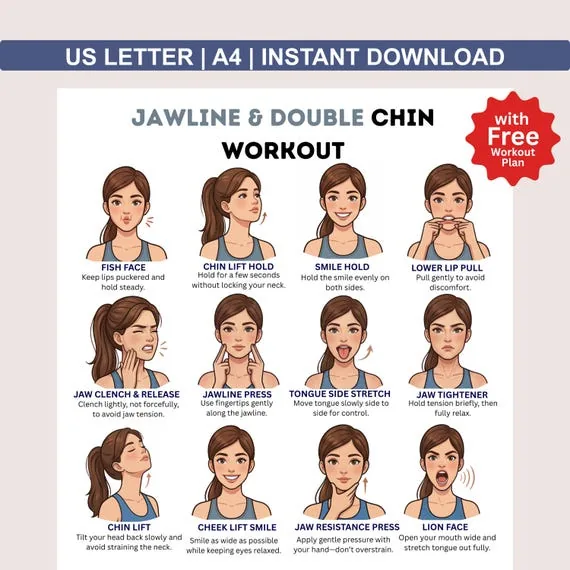
It is completely normal to feel a little self-conscious about your facial profile, especially when social media constantly highlights sharp jawlines as the standard. That quiet worry can make it tempting to try every trending routine promising fast results. But before you commit hours to repetitive movements that might strain your joints, it helps to separate what actually supports healthy muscle tone from what is mostly hype.
I spent time digging into how the muscles around the face and neck respond to movement, overall body composition, and daily habits like posture. What I found is that while jaw exercises for a better jawline are popular online, their real impact depends heavily on factors like genetics, body fat levels, and whether the movements are done safely without overworking the temporomandibular joint—the hinge connecting your lower jaw to your skull. Pushing these small muscles too hard can lead to discomfort rather than definition.
This piece pulls together practical, research-backed information on what influences facial structure and which gentle habits may support muscle health over time. Because everyone’s anatomy is different, a licensed healthcare professional or dentist is always the best person to consult if you experience pain or have specific concerns. The goal here is simply to give you a clear, honest foundation so you can decide what makes sense for your own daily routine.
Signs Your Jaw Muscles Need Attention
Fact-checked. This content is for reference only and does not replace professional medical advice.
Recognizing tension, clicking, or asymmetry in the lower face
It is completely normal to worry if your jaw feels tight or makes unexpected sounds. Much like how the ulnar nerve in your elbow produces a strange tingling sensation when bumped rather than typical pain, jaw issues can feel unfamiliar and unsettling. Research suggests that paying attention to these signals early helps maintain comfort during daily habits like eating or speaking.
Common signs that the muscles around your temporomandibular joint—the hinge connecting your lower jaw to your skull—might need care include:
- Persistent tension or soreness after waking up
- A noticeable clicking or popping sound when chewing
- Mild asymmetry, where one side of the lower face appears slightly different from the other
Gentle jaw exercises for better jawline mobility are often discussed as a way to ease everyday stiffness. However, if discomfort lingers, a licensed provider can offer personalized guidance.
How muscle weakness affects your overall facial structure
Just as your eye muscles require distinct periods of rest during non-REM sleep cycles, your jaw muscles also depend on balanced use and recovery. When these muscles become weak or overly fatigued, it may subtly influence the resting posture of your lower face over time.
Consider these general effects of underused or strained jaw muscles:
- Reduced support for the soft tissues of the lower face
- A tendency to hold the mouth in an unnatural resting position
- Uneven wear patterns on teeth due to imbalanced chewing forces
Incorporating mindful movement and basic jaw exercises for better jawline tone is a healthy habit many people explore alongside good sleep hygiene and desk posture. If you have a specific concern about facial tension or joint clicking, consider speaking with a specialty provider such as a dentist or orofacial pain specialist.

Do Jaw Exercises for a Better Jawline Actually Change Your Face?
It is completely normal to wonder if jaw exercises for a better jawline can reshape your face. Let us look at what anatomy actually suggests.
Separating viral trends from anatomical reality
Social media often promises dramatic facial changes through repetitive chewing or clenching. In reality, basic anatomy limits what movement alone can achieve. Like any muscle, the masseter (the main chewing muscle) can grow slightly with heavy use, much like a bicep responds to lifting weights. However, your overall facial shape depends on several factors:
- Bone structure, which genetics largely determine
- Fat distribution, influenced by overall body composition and daily habits
- Muscle size, which may change subtly but rarely transforms a face
Health authorities generally advise that targeted movements do not burn fat in one specific area. If you are considering new daily habits for appearance, a balanced approach to nutrition and sleep hygiene usually matters more than isolated routines.
Why bones are living, spongy tissue with blood supply rather than dry structures
Many people picture bones as dry, rigid sticks. As medical educators often point out, bones are actually wet, living tissue filled with blood vessels. They have a spongy interior that constantly rebuilds itself throughout life.
Because bone is living tissue, it adapts slowly to long-term physical stress. Yet, simply performing these exercises is unlikely to remodel adult bone quickly or safely. Excessive force on the jaw joint can sometimes cause discomfort rather than cosmetic improvement. Since everyone's anatomy is unique, if you have specific concerns about facial structure or jaw tension, consider speaking with a specialty provider such as a dentist or maxillofacial specialist.
Fact-checked. This content is for reference only and does not replace professional medical advice.
Understanding How Facial Muscles Work and Rest
If you worry about overworking your face while exploring this topic, that concern is completely normal. I am someone who researched this topic carefully, not a doctor or clinic, so please treat this as general information.
Why different muscles require varying amounts of recovery time
Muscles have different jobs, so they need different amounts of rest. Think of it like carrying groceries: your arms tire quickly, but your legs keep walking. Clinical guidance usually says facial muscles used in facial exercise routines fatigue faster than postural muscles because they are built for brief, precise movements rather than endurance.
- Skeletal muscles (like those in the jaw) need regular breaks to repair tissue.
- Smooth muscles (found in organs) work slowly and continuously.
- Cardiac muscle has its own unique rhythm and barely pauses.
Comparing constant-work muscles like the heart to muscles that relax during non-REM sleep cycles
Your heart beats constantly throughout the day and night, never fully stopping, even when you sneeze. It only relaxes briefly between beats. In contrast, the tiny muscles controlling your eyes stay active during wakefulness. Sleep hygiene basics matter here because eye muscles finally rest during non-REM sleep phases. Sleep happens in cycles, meaning these muscles are not working endlessly all night. If you experience unusual facial tension or pain, consider speaking with a licensed provider such as a dentist or physical therapist.
Fact-checked. This content is for reference only and does not replace professional medical advice.
Effective Movements to Strengthen Your Lower Face
If you feel uncertain about where to start with facial movement, that is completely normal. Exploring this version of support is a gentle daily habit, much like applying sunscreen directly to your skin before makeup so it can do its job properly.
Simple resistance techniques you can perform safely at home
Just as different muscles have different functions and need varying amounts of rest—similar to how eye muscles relax during non-REM sleep cycles—your lower face muscles respond best to gradual effort rather than sudden strain. Start slowly:
- Chin tucks: Gently draw your chin toward your neck while keeping your shoulders relaxed.
- Tongue press: Press your tongue firmly against the roof of your mouth to engage the area under your chin.
- Jaw clench release: Briefly close your teeth together, then fully relax the muscles.
Avoid aggressive pressure. Clinical guidance usually says that slow, controlled movements are safer for everyday habits.
Targeted alignment movements to address uneven muscle development
Faces naturally develop slight asymmetry over time. Think of it like learning a new physical skill; consistency matters more than intensity. To encourage balanced engagement when practicing this recipe for definition, consider these steps:
- Practice chewing evenly on both sides during meals.
- Perform slow side-to-side jaw glides without forcing the joint.
- Maintain neutral head posture throughout the day.
If you notice persistent clicking or discomfort, consider speaking with a specialty provider, such as a dentist or physical therapist. This content is fact-checked for reference only and does not replace professional medical advice.

Common Myths That Waste Your Time
It is completely normal to feel overwhelmed by conflicting advice online. Sorting fact from fiction takes patience, especially when exploring this dish.
Why gimmicky gadgets and viral toys often fail to deliver results
Social media constantly promotes chewy silicone balls and vibrating tools promising instant facial changes. Much like the childhood myth that stepping on sidewalk cracks causes harm, these products rely on catchy ideas rather than biology.
Facial shape is primarily determined by bone structure and genetics, not surface-level gadgets. Common reasons these tools fall short include:
- Ignoring anatomy: Bones are living, spongy tissue with blood vessels inside; they cannot be reshaped simply by chewing a rubber toy.
- Overworking muscles: Excessive resistance can strain the temporomandibular joint (the hinge connecting your jaw to your skull), leading to discomfort.
- Lacking evidence: Clinical guidance generally does not support using novelty items for structural facial changes.
Debunking quick-fix claims by applying basic medical logic
Just as lemons do not magically cause weight loss because they still contain calories, no simple trick guarantees a sculpted face overnight. When evaluating the method, apply practical reasoning:
- Muscle vs. Bone: Gentle movement may slightly tone muscles, but it will not alter your underlying skeletal frame.
- Nerve awareness: Hitting your "funny bone" actually irritates the ulnar nerve, not a bone. Similarly, aggressive facial routines risk irritating delicate nerves.
- Realistic timelines: Healthy habits take time. If a claim promises instant transformation, it likely oversimplifies human biology.
If you have specific concerns about facial structure or jaw pain, consider speaking with a licensed provider such as an oral surgeon or dermatologist.
Red Flags and When to See a Doctor
I know it can be worrying when your face hurts after trying this version. A little discomfort is normal, but certain signals mean you should pause and get checked out.
Warning Signs: Shooting Electrical Nerve Pain Versus Normal Dull Muscle Soreness
Just like hitting your funny bone isn’t actually about the bone—it’s the ulnar nerve sending an electrical, shooting, tingly sensation—your jaw area has nerves that behave similarly if irritated. Regular muscle soreness from movement feels dull, achy, or throbbing. Nerve pain feels entirely different: sharp, awkward, and tingling.
If you notice these warning signs while doing daily facial movement habits, stop immediately:
- Shooting or electrical sensations instead of a mild ache
- Tingling or numbness spreading across your face or jaw
- Sudden, sharp pain that feels distinctly unlike typical workout fatigue
Symptoms Indicating TMJ Dysfunction or Nerve Compression That Require Professional Evaluation
The temporomandibular joint (TMJ) connects your lower jaw to your skull. When irritated, it can cause problems beyond simple soreness. Research suggests that ongoing strain in this area may lead to dysfunction or even nerve compression, which requires a proper evaluation rather than guesswork at home.
Please consult a licensed provider if you experience:
- Persistent clicking or locking when opening your mouth
- Difficulty chewing or unexpected changes in how your teeth fit together
- Pain radiating toward your ear or temple that doesn’t fade with rest
This information is for reference only and does not replace professional medical advice. Details around safe movement can change, so if you have a specific concern about your routine, consider speaking with a specialty provider such as a dentist who focuses on orofacial pain or a physical therapist experienced with the jaw.
Final Thoughts
It is completely normal to feel frustrated when the results you want seem out of reach. After researching this topic carefully, it is clear that this recipe is not a guaranteed fix. Genetics, overall body composition, and daily habits like posture play a much larger role than repetitive movements alone. Health authorities generally advise caution with intense facial routines, as overworking these muscles can sometimes lead to discomfort rather than definition.
Instead of chasing quick fixes, focus on what you can control today. Start by checking your resting posture—keep your tongue gently against the roof of your mouth and avoid clenching—and stay consistent with general healthy habits like balanced nutrition and adequate hydration. If you have specific concerns about facial structure or muscle tension, consider speaking with a specialist such as a dentist or an orthodontist.
Fact-checked. This content is for reference only and does not replace professional medical advice.
References
- Jaw Exercises for Better Jawline (pinterest.com)
- Jaw Exercises to Give You A Better Jawline | TikTok (tiktok.com)
- exercises-for-the-jawline - Dentist in Tambaram | Dental Clinic in... (dramarnathansdentalcare.com)